Overview
What it is and who it suits
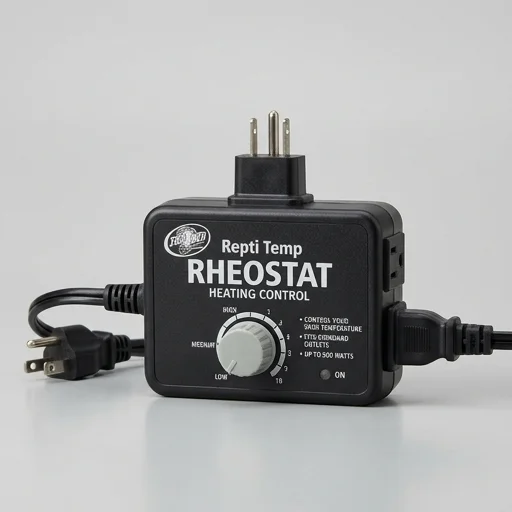
The Zoo Med Repti Temp Rheostat is a dependable heat control device engineered specifically for reptile and amphibian enclosures, offering keepers precise manual control over the output of heating elements such as ceramic heat emitters, incandescent bulbs, and under tank heaters. Unlike simple on-off thermostats, a rheostat functions by dialing back the percentage of electrical power delivered to the connected heat source, allowing hobbyists to fine-tune warmth levels to match the specific needs of species ranging from desert-dwelling bearded dragons to tropical geckos and snakes. This manual adjustability makes it a favored tool among reptile keepers who want direct, hands-on control over their terrarium's thermal gradient without relying on automated digital sensors.
Built with a straightforward dial interface, the Repti Temp Rheostat is designed for ease of use even for beginners setting up their first vivarium. The unit plugs into a standard outlet, and the heating appliance is plugged directly into the rheostat, after which the dial can be rotated to increase or decrease wattage output. This simplicity makes it ideal for pairing with basking lamps, heat tape, or heat pads where a consistent reduction in intensity is needed to avoid overheating delicate reptile and amphibian species. Its compact housing is designed to withstand the humidity and heat typical of terrarium environments, ensuring long-term reliability in enclosures ranging from glass tanks to custom-built reptile habitats.
For reptile and exotic pet keepers prioritizing both safety and husbandry accuracy, the Zoo Med Repti Temp Rheostat serves as an essential piece of equipment in creating stable, species-appropriate temperature zones. Because overheating is a major risk with high-wattage heat sources, having granular control over power output helps prevent burns, heat stress, and uneven basking spots. It integrates well into a broader reptile care setup alongside thermometers, hygrometers, and digital thermostats, giving keepers an additional layer of control over their terrarium's climate. As a trusted name in herpetoculture equipment, Zoo Med designed this rheostat to meet the practical demands of both novice and experienced reptile enthusiasts seeking consistent, customizable heat regulation for the long-term health of their animals.
What stands out
- 01Manual dial-controlled rheostat for heating devices
- 02Compatible with heat mats, ceramic heat emitters, and basking bulbs up to 150 watts
- 03Reduces or increases wattage output to regulate terminal temperature
- 04Simple on/off switch with percentage-based power dial
- 05Compact design with mounting bracket for enclosure setup
- 066-foot power cord for flexible placement near terminals
Specifications
The numbers that matter
| Max Wattage | 150 watts |
|---|---|
| Cord Length | 6 feet |
| Control Type | Manual rheostat dial |
| Compatible Devices | Heat mats, ceramic heat emitters, basking bulbs |
| Power Switch | On/off toggle with percentage dial |
Pros & cons
Where it shines, where it doesn't
What we like
- Affordable way to control heat output manually
- Works with multiple heating device types
- Durable construction that lasts years
- Easy to install and use right out of the box
- Helps prevent overheating when dialed in properly
- No complex programming required
Watch out for
- Does not maintain a precise set temperature automatically
- Requires manual adjustment as ambient conditions change
- No digital display showing current wattage or temperature
- Dial markings are not exact degree indicators
- Not a substitute for a thermostat in sensitive setups
- Can be easy to accidentally bump and change settings
The verdict
The Zoo Med Repti Temp Rheostat is a solid budget-friendly tool for keepers who want manual control over their heating devices rather than full thermostatic regulation. It works well for basking bulbs and ceramic heat emitters where some temperature fluctuation is acceptable, but reptile owners needing precise, automatic temperature maintenance should pair it with a thermostat or opt for one instead. As a supplementary heat control device, it delivers reliable performance at a reasonable price point.Check current price